Category: International Relations & Diplomacy
-
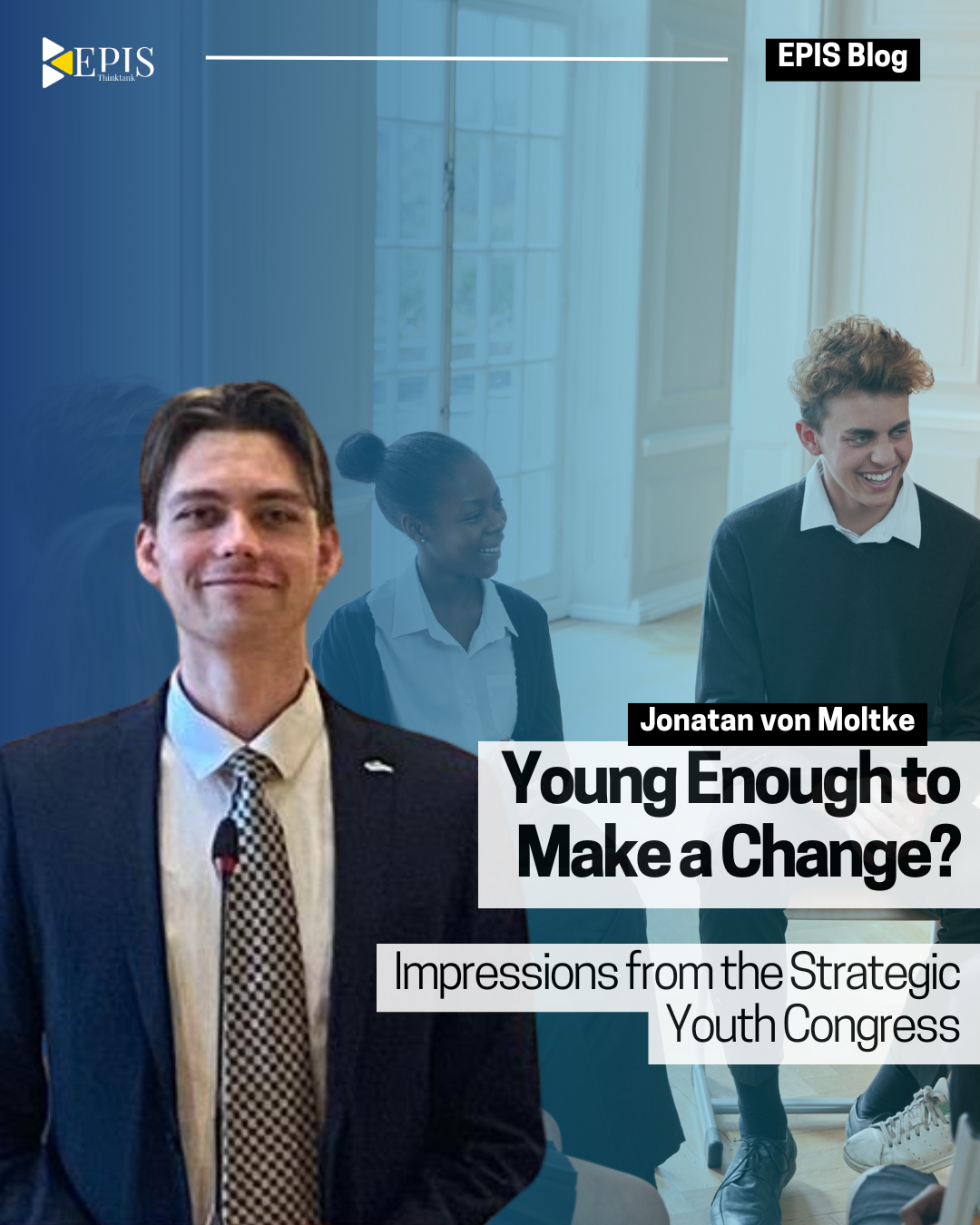
Young Enough to Make a Change?
– What was the Strategic Youth Congress, and what happened there? – Youth is not an excuse for passivity, but a reason for engagement – The SYC was a success for youth to be strategically involved in foreign-policy making
-
Hedging Against Uncertainty
What is Hedging? Hedging is a foreign policy strategy of states against uncertainty. Hedging, although a contested concept, can help observers make sense of international relations.
-
Shifting Paradigms
The text asks whether Chinese experts’ long-held views of the EU as an economic stabilizer and nonrival are shifting. It argues that while most still see Europe as weak yet useful, growing protectionism, US dependence, and the Ukraine war challenge this view. Experts blame Europe’s anxiety and misjudgment for tensions, urging it to make the…
-

Entering a New Phase of Geopolitical De-Risking
Can U.S. cities protect themselves from foreign influence? As Sino-U.S. sister city partnerships come under growing scrutiny, Vincent Sipeer examines how local diplomacy has become an overlooked front in great power competition. He argues that while China’s tightly coordinated system gives it an asymmetric advantage, the U.S. must not emulate authoritarian control. Instead, he calls…
-
When Supply Lines Become Fault Lines
Can Japan and South Korea keep the lights on amid Indo-Pacific tensions? As rising geopolitical frictions threaten critical maritime routes, Johannes Hollunder analyses how the energy import dependencies of Japan and South Korea expose them to external shocks. Drawing on lessons from Europe’s 2022 energy crisis, he examines both countries’ vulnerabilities, evaluates their mitigation strategies,…
-

Foresight Analysis for Policymaking in International Relations
Can policymakers really anticipate the future? As uncertainty defines today’s global politics, Jonatan von Moltke explores the rise of foresight analysis as a tool for strategic governance. He examines how methods like horizon scanning, scenario mapping, and megatrend analysis can help governments prepare for disruptive change – and weighs their promise against the risks of…
-
China 2049 vs. India 2047
What are the great power plans for the mid-21st century—and how do they differ? China and India are charting rival paths toward global influence through their initiatives. Marie Klostermeier examines how both nations’ economic, military, and institutional strategies reflect distinct historical experiences and ambitions. While China’s vision centres on reclaiming dominance through state-led transformation and…
-

In the Eyes of Empire
– Why do Latin American elites keep courting foreign power—chasing recognition abroad while trading away sovereignty? – A fantasy of imperial recognition—embedded in an external legibility regime—rewards mimicry and validation abroad over democratic legitimation at home. – Break the spell—traverse the fantasy. Reform elite pipelines, ditch external benchmarks, and make domestic accountability the currency of…
-
China’s Security Footprint in the Middle East
1. Is China changing the balance of power in the Middle East to a multipolar order? 2. China isn’t just about trade anymore — it’s stepping into security. From brokering deals to selling arms and joining military drills, China is quietly building real influence. 3. The Middle East is no longer just America’s backyard. With…
-
“Weimar Plus”
“Main question: Can Weimar Plus reshape Europe’s security through minilateralism amid U.S. ambiguity? Argument: The grouping offers agility and potential for defense cooperation, but diverging interests, weak institutionalization, and political rifts undermine effectiveness. Conclusion: Weimar Plus is promising yet premature; its success hinges on cohesion, tangible outcomes, and complementing EU and NATO rather than replacing…