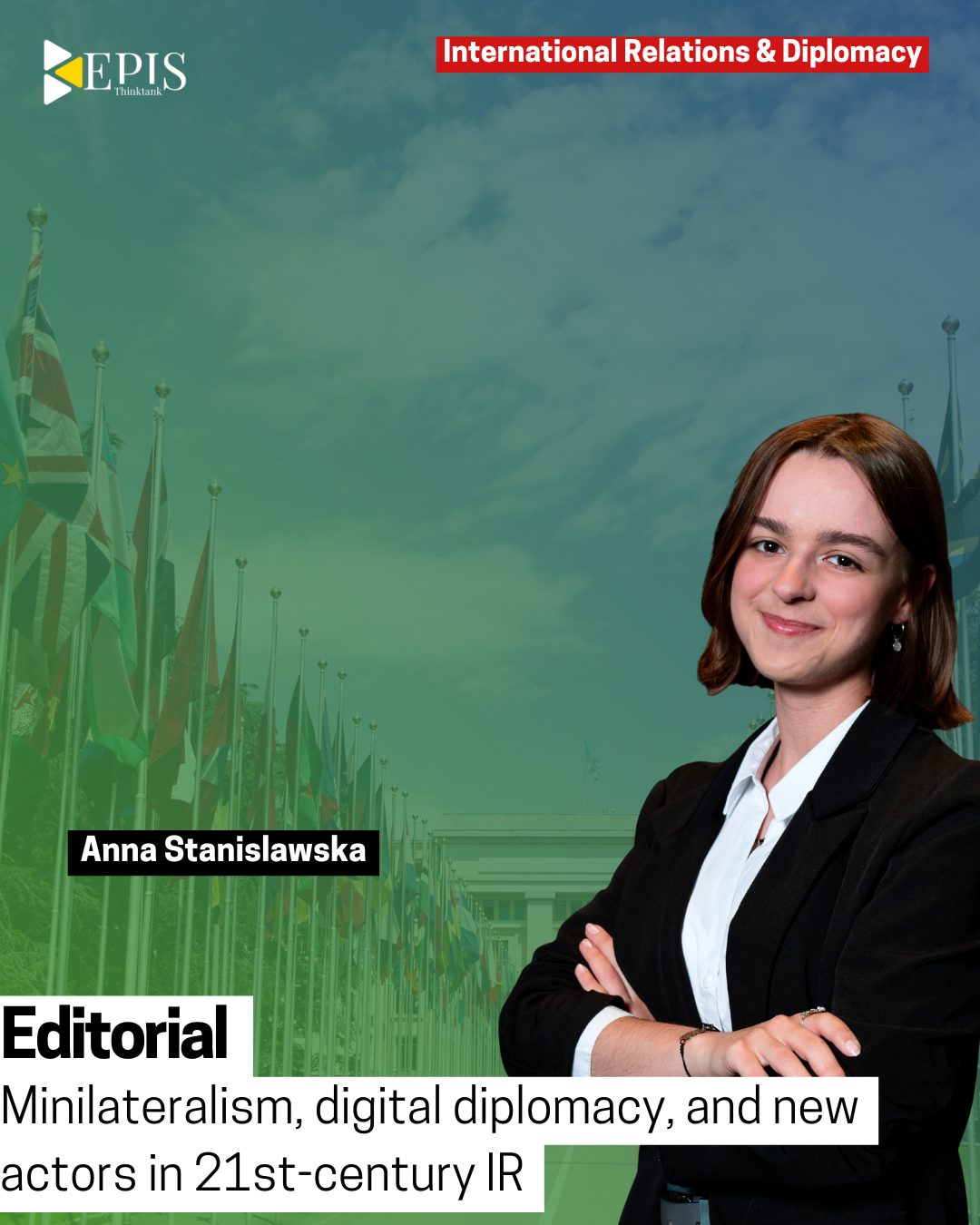
Minilateralism, digital diplomacy, and new actors in 21st-century IR
Timeframe: 01/01/1946 – 29/11/2025
Key Insights
- Main Question: How is international cooperation evolving in a fragmented world?
- Argument: Traditional multilateral structures like the UN are losing trust; states and actors are turning to minilateralism, hybrid partnerships, digital diplomacy, and strategic investments to secure tailored solutions.
- Conclusion: Contemporary IR is marked by adaptive, flexible, and diverse approaches, highlighting innovation and shifting power balances.
Definition
Post-Westphalian diplomacy: Cooperative international frameworks beyond traditional state-centric, rigid multilateral systems, emphasizing flexibility and tailored partnerships
Dear Reader,
In this changing world and pivots on cooperation, old ideas are forced to evolve and adjust accordingly to the new needs.
After the post-war order and the creation of the League of Nations that later evolved into the widely known United Nations, peace and cooperation found its platform. However, the modern world is starting to lose trust towards the big blocks after their potential and security mechanisms failed. This realization, explored in Marie’s analysis of Post-Westphalian Diplomacy, accelerates a fundamental rethinking of global security. That’s why countries from all parts of the world are turning towards alternative models of cooperation.
This search for new frameworks defines the contemporary international arena. We see the urgency of this pivot reflected in the emergence of minilateral initiatives and NATO’s hybrid partnerships, offering tailored solutions where broader consensus has fractured. Simultaneously, we examine how powers are deploying non-traditional tools, including digital diplomacy and PSYOPS campaigns, and dissect the geopolitical significance of strategic investments, looking closely at China’s Belt and Road Initiative and the vital potential of the new EU-India partnership.
In this report you will find analysis on how the importance of different actors on the international arena is changing—from the diplomatic role of small states to the strategic affirmation of the Global South—and how the approach changed on different continents. You will see what young, aspiring professionals pay attention to and how their fresh eyes analyse international affairs.
This report is to mark the changing dynamic of international relations in the XXI century and highlight the most revolutionary pivots. In the name of our writers, we wish you a pleasant reading.
Anna Stanislawska
Editor of the EPIS International Relations and Diplomacy Report Group
New global dynamics favor minilateral initiatives, digital diplomacy, and emerging actors, reflecting a shift from traditional blocs toward adaptive and flexible cooperation
Documents: 📄 Full Publication (PDF) 📂 Source Document
Leave a Reply