Author: Sophie Groenheijde
-
Rational Actor Model
The rational actor model assumes states assess policy options based on their predicted payoff. The policy with the highest payoff concerning an overarching goal is chosen. Specifically, comprehensive rationality assumes states are fully informed of payoffs. In contrast, bounded rationality believes states may not be fully informed of payoffs and may be influenced by historical…
-
Jawaharlal Nehru
Nehru became India’s first prime minister. Domestically, Nehru promoted democracy and secularism. Regarding foreign policy, Nehru advocated for non-alignment.
-
Monroe Doctrine
In 1823, during a speech to the US Congress, President Monroe articulated his vision of the world being divided into the Old World and the New World. The Americas constituted the new world, within which the US would not tolerate any expansion of European colonial activities. In return, the US would not intervene in European…
-
Camp David Peace Accords
After twelve days of secret negotiations at Camp David, Israel and Egypt signed the Camp David Accords on September 17th 1978. The accords consisted of two agreements. The first agreement saught to establish an autonomous authority in the West Bank and the Gaza Strip. The second built the basis for Israel to cede the Sinai…
-

Europol
Founded in 1998, Europol is an EU organ responsible for facilitating police cooperation between EU member states. Therefore, Europol creates databases and issues reports on crime. However, Europol cannot start investigations or arrests. Instead, it can only take part in Joint Investigation Teams.
-
Feminist International Relations Theory
Feminist international relations theory posits that gender inequalities transcend borders. Consequently, adopting a feminist lens on international relations is merited. In doing so, gender norms are identified and challenged. For example, the focus on states in international relations is the product of a male-dominated state apparatus. Hence, feminist international relations theorists go beyond states, including…
-
Abraham Accords
The Abraham Accords are a framework agreement to normalise relations between Israel and the Arab World. The content of the accords is broad. Signatories pledge to pursue greater cooperation and tolerance as a basis for peace. As such, the Abraham Accords are only a first step for Arab nations to further normalise ties with Israel…
-
Quadrilateral Security Dialogue
The Quadrilateral Security Dialogue (Quad) was first created in 2008 but dispanded following Australia’s exit in 2009. In 2017, the Quad was re-established. Observers have seen the Quad as a testimony to greater competition between China and the US. Indeed, China has referred to the Quad as an “Asian Nato”. However, the Quad lacks the…
-
Organization for the Prohibition of Chemical Weapons
The Organization for the Prohibition of Chemical Weapons (OPCW), located in The Hague, the Netherlands, was created to oversee the 1997 Chemical Weapons Convention (CWC). The CWC prohibits the use of and orders the destruction of chemical weapons. In 2013, the OPCW was awarded the Nobel Peace Prize.
-
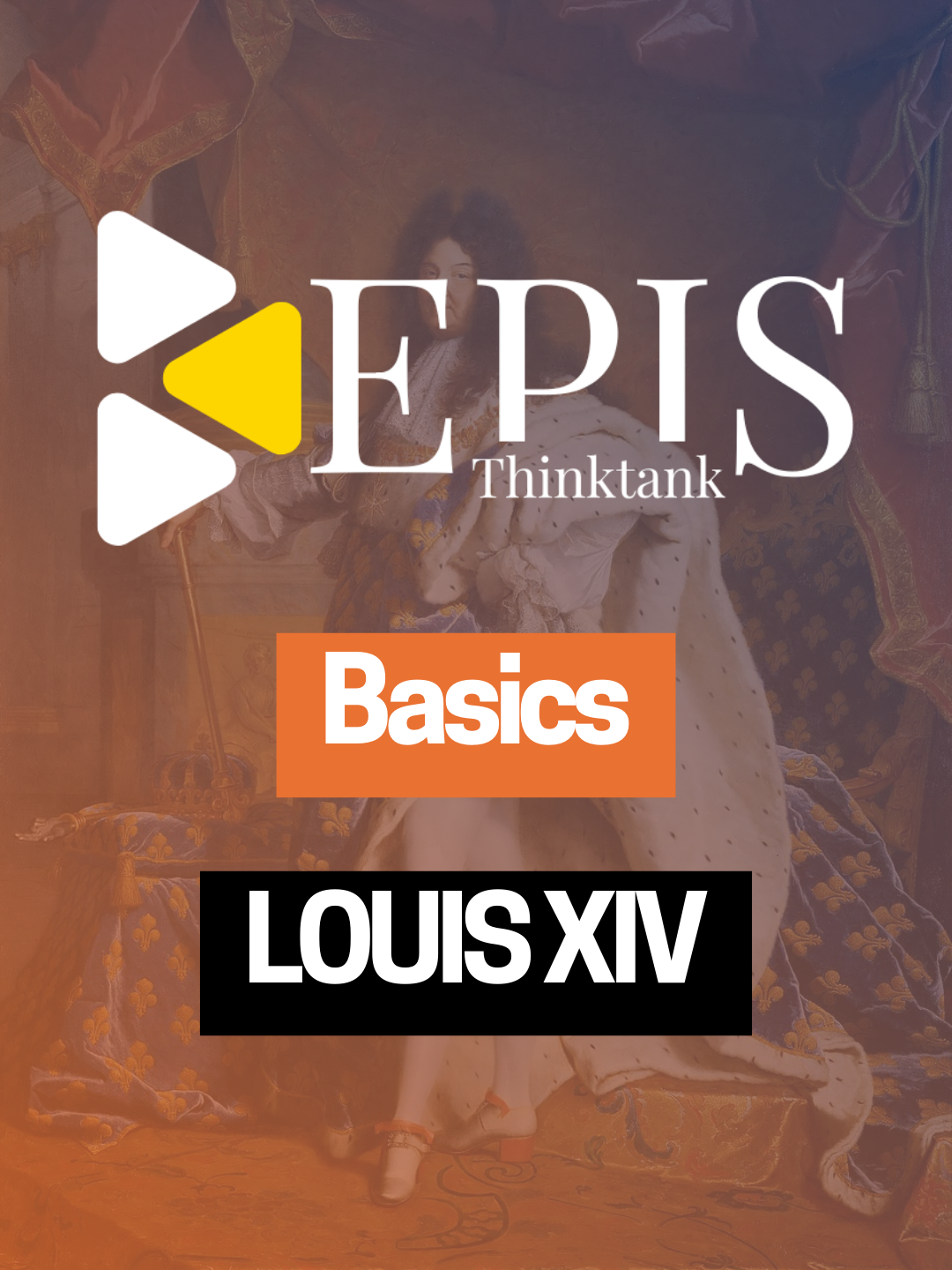
Louis XIV
Reigning from 1643 to 1715 as French King, Louis XIV is the longest-reigning monarch in history. During his reign, Louis XIV epitomised the Age of Absolutism. Enlargening his Versailles castle, Louis hosted French nobility and concentrated state power in his hands. His unrestricted rule also made him known as “The Sun King”. In his efforts…