Category: EPIS Basics
-
Joseph Stalin
Joseph Stalin, the leader of the Soviet Union from the 1920s until his death in 1953, had a significant impact on the international order during and after World War II. He allied with the United Kingdom and the United states to eventually defeat Nazi Germany in 1945. Stalin’s post-war actions contributed to the division between…
-
Ruhollah Khomeini
Ayatollah Khomeini’s rise in Iran marked a turning point in Middle Eastern relations. As the leader of the Islamic Revolution in 1979, he established an Islamic republic and challenged Western influence in the region. Khomeini’s anti-Western stance affected global oil markets and inspired similar movements. His confrontational approach and pursuit of nuclear capabilities intensified tensions…
-
Mao Zedong
Peasant Revolution: Reinterpreted Marxism by centering the rural peasantry rather than the urban working class as the primary force of revolution. Mass Campaigns: Launched radical initiatives like the Great Leap Forward and Cultural Revolution to forcibly transform China’s social and economic structure. People’s War: Developed guerrilla warfare doctrines that emphasized psychological mobilization, influencing revolutionary movements…
-
Lee Kuan Yew
Lee Kuan Yew is often referred to as the founding father of Singapore. After Singapore’s expulsion from Malaysia in 1965, Lee became Singapore’s first prime minister. Providing social housing and social programs, Lee fostered cohesion between Singapore’s Chinese and Malay ethnicities. Levying a combination of state subsidies and efforts to increase free enterprise, Lee sought…
-
Frederick the Great
As Prussian King, Frederick the Great waged wars against Habsburg, France, and Russia, establishing Prussia as a major European power. Besides military accomplishments, Frederick the Great is often regarded as a representative of enlightened absolutism. Although concentrating power, Frederick believed the ruler ought to rule for the benefit of the people. Following this narrative, Frederick…
-
League of Nations
The covenant of the League of Nations was part of the 1919 Treaty of Versailles. Headquartered in Geneva, Switzerland, the organisation was the first to be dedicated to preventing wars and solving disputes peacefully. However, the US Congress refused to ratify the US entry into the League of Nations, weakening the institution. The League of…
-
Congress of Vienna
After the Napoleonic Wars, European powers convened at the Congress of Vienna to reorder Europe. Lasting from 1814 to 1815, the Congress was renowned for its lavish banquets, balls, and intricate negotiations. The Congress sought to reestablish monarchies to increase the legitimacy between states and limit the scope of future conflicts. Moreover, a stable balance…
-
Treaty of Tordesillas
After Columbus discovered America in 1492, tensions arose between Spain and Portugal over the possession of new territories. To avoid war, Pope Alexander VI mediated between the powers, leading to the 1494 Treaty of Tordesillas. The Treaty vaguely established a meridian off the coast of the Cape Verde Islands. Territories West of the meridian belonged…
-
Cardinal Richelieu
During the 30 Years War, Catholic France pursued alliances with the Protestant Dutch Republic and Sweden. Richelieu, himself a Catholic cardinal, arranged these alliances to balance against the Habsburg Empire. In doing so, Richelieu championed “raison d’etat”, detaching the state from religious ideologies and providing it with its own interests. In strengthening the “raison d’etat”,…
-
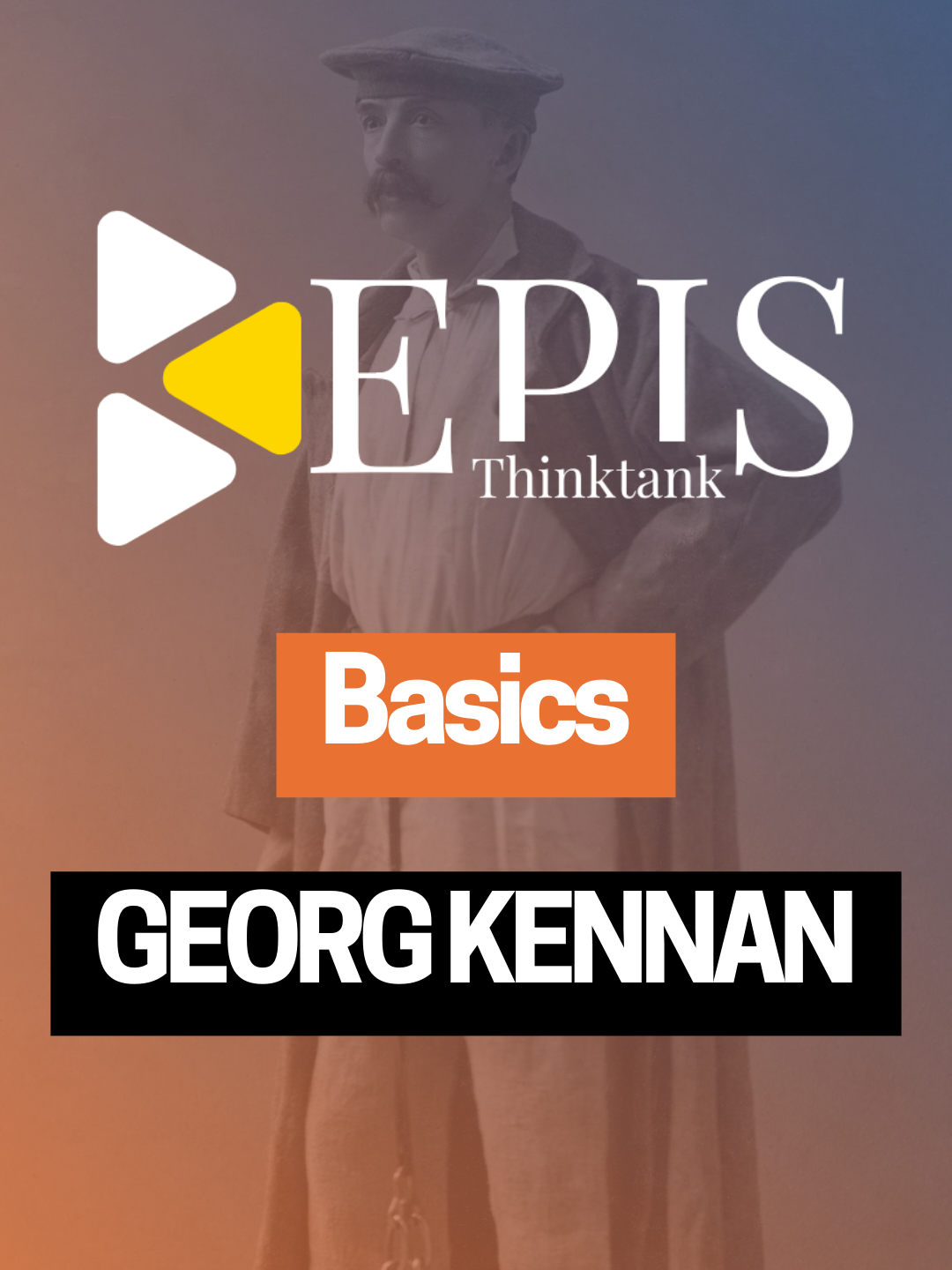
George Kennan
In 1946, writing from Moscow, Kennan sent the “long telegram” to Washington, D.C. The telegram interpreted the Soviet Union’s foreign policy as expansionist and rooted in a traditional Russian sense of insecurity and the need to oppress its population. The long telegram influenced the belief that the Soviet Union’s foreign policy was not driven by…