Author: Pablo Mathis
-
United Nations Security Council
The United Nations Security Council (UNSC) is one of the principal organs of the UN, responsible for ensuring international peace and security. It consists of 15 member states and 5 permanent members, and the permanent members possess veto power on every proposal. The Security Council has authority to impose sanctions, authorise peacekeeping missions, and take…
-
World Health Organisation
The World Health Organisation (WHO) is a UN agency responsible for global public health. It is critical in disease prevention and coordinating responses to health emergencies. Consequently, the WHO not only provides aid to countries but also monitors global health and develops health standards. Amongst the WHO’s most notable achievements lie the eradication of smallpox…
-
Neoliberalism
Neoliberalism is a strand of liberalism that concentrates on economic aspects. While both liberalism and neoliberalism emphasise cooperation among state and the role of international institutions, neoliberalism specifically prioritises the benefits of economic globalisation and market-oriented policies. It places a huge emphasis on mechanisms such as deregulation, privatisation, and free markets to promote economic growth…
-
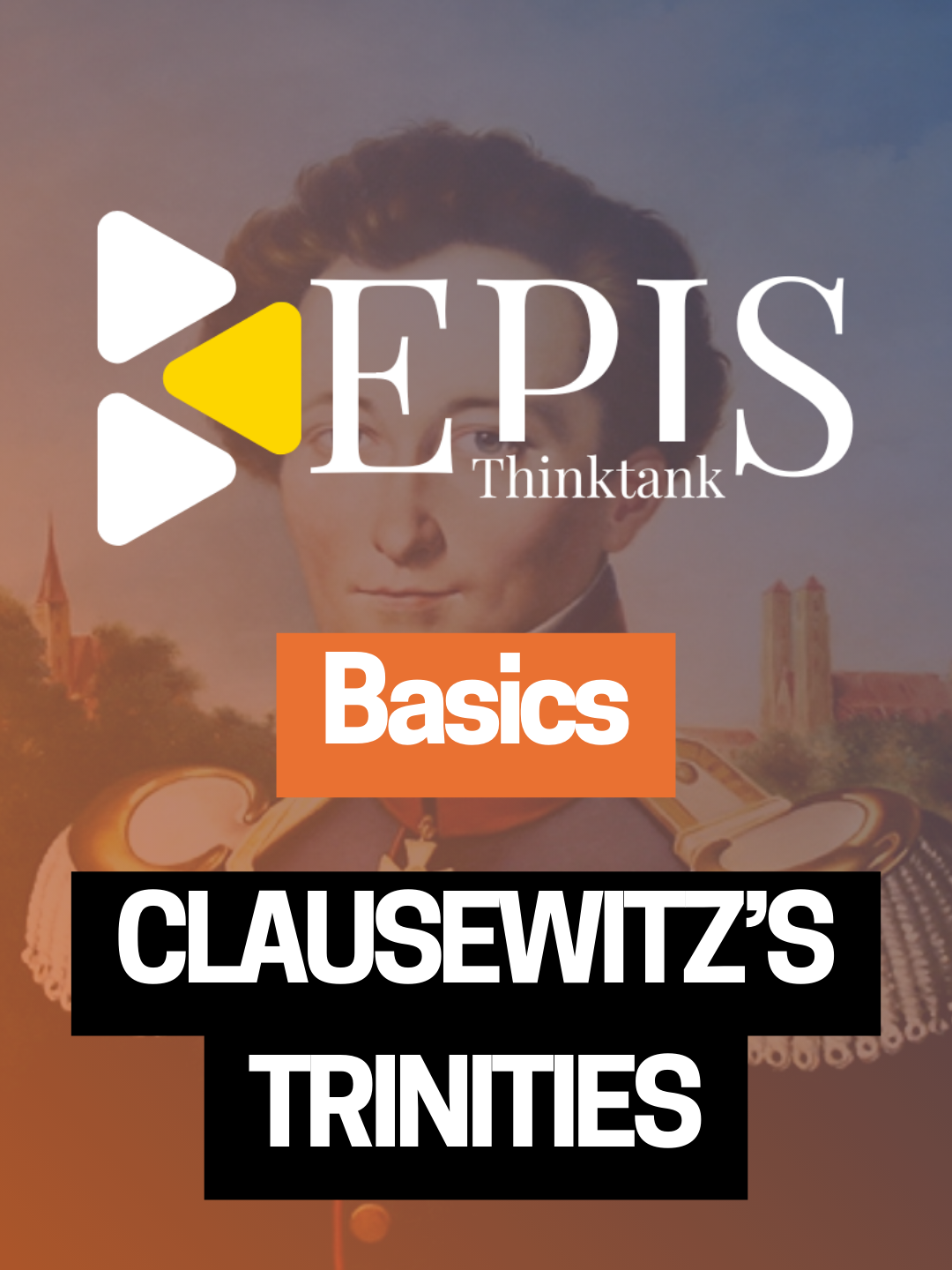
Clausewitz’s Trinities
The Prussian general and military strategist Carl von Clausewitz described war as a trinity of passion, chance, and reason. Passion resembles intrinsic hatred and is often associated with the population. Reason is likely attributed to the government. Clausewitz affiliated chance with the military.
-
Centre of Gravity
Besides his famous trinities describing the nature of war, Clausewitz introduced the concept of the “centre of gravity.” Initially referring to the point where the enemy’s forces were concentrated, Clausewitz later revised the concept. In its later iteration, “centre of gravity” refers to the source of the enemy’s power, that being its population and morale.
-
Peace of Westphalia
The Peace of Westphalia, signed in the German cities of Münster and Osnabrück, ended the 30-Year War. Some scholars have argued that the treaty established the principles of legal equality and states having exclusive sovereignty over their territories. However, critics have doubted whether these principles were ever widely accepted and whether they originated from the…
-
English School Theory
The English School Theory of International Relations aims to reconcile Realism and Idealism, emphasizing power and sovereignty alongside norms and institutions’ impact on global outcomes. It highlights the evolution of an international society based on common values, rules, and shared interests, fostering cooperation while acknowledging the enduring significance of state power.
-
Nuclear Triad
The nuclear triad describes the capability of a military to deliver nuclear warheads via bombers, in missile silos on land and submarines. Nuclear missiles based on land are often classified as Intercontinental Ballistic Missiles (ICBMs). Submarines may carry Submarine-Launched Ballistic Missiles (SLBMs) armed with nuclear warheads. The nuclear triad ensures an enemy cannot eliminate all…
-
Cardinal Richelieu
During the 30 Years War, Catholic France pursued alliances with the Protestant Dutch Republic and Sweden. Richelieu, himself a Catholic cardinal, arranged these alliances to balance against the Habsburg Empire. In doing so, Richelieu championed “raison d’etat”, detaching the state from religious ideologies and providing it with its own interests. In strengthening the “raison d’etat”,…
-
Game Theory
Game Theory is a framework for analysing strategic interactions between states where outcomes depend on the choices of all actors involved. States aim to maximize their own gains while considering the potential actions of other states. This approach helps understand how states might cooperate, compete, or engage in conflict, based on their assumptions of each…