Tag: Environmental Security
-
DRC: Rich land, hungry people.
Food insecurity in Eastern DRC is structurally driven by conflict, displacement, and livelihood collapse, not scarce land. Climate change, hazardous pesticides, gender barriers, and neglected crop species compound the crisis. Humanitarian aid often reinforces dependency rather than building resilience. Lasting solutions require integrated Triple Nexus strategies that link emergency response, agricultural development, and peacebuilding.
-
Accountability Gaps in Indonesia’s Palm Oil
How do governance failures and land conflicts in Indonesia’s palm oil sector contribute to broader climate security risks? Weak legal frameworks and export-driven growth enable corporate control and elite rent-seeking. As a result, land conflicts, labour exploitation, and environmental degradation persist, revealing major accountability gaps at both national and global levels.
-
Resilient Roots: EU Tech Grants for Farmers
How can the EU accelerate climate tool adoption for smallholders in Africa and SE Asia without increasing financial risk? Loan-based models create debt burdens during crop failures; thus, a grant-based instrument within the NDICI-Global Europe framework is essential to fund both technology and long-term support. These grants serve as a preventive stabilization tool, reducing global…
-
Bolivia’s Environmental Policy Since Evo Morales
Is it possible for Bolivia to promote an environmental-forward political agenda while reproducing the structures of a neoliberal-capitalisit world system? Bolivia’s reliance on neo-extractivism to fund social programs reproduced dependency, highlighting contradictions between indigenous worldviews and capitalist economic imperatives. The case suggests that meaningful ecological transformation is difficult without a deeper structural break from extractivist…
-
-
Critical political ecology (CPE)
– The concept of critical political ecology highlights the link between the moral and practical concerns of the environmental movement and contemporary theories about the state, democracy, and justice. – Liberal democratic states are constrained in their ability to implement their green transition by growth imperatives. – By reframing state imperatives as politically contested rather…
-
Power Struggles in the Energy Transition
How does China’s dominance in critical minerals and clean-tech manufacturing reshape global power in the energy transition? This brief argues that China’s control across the entire mineral-to-technology supply chain creates asymmetric dependencies that influence national climate strategies and create inequalities. As mineral geopolitics rises, securing diversified and resilient supply chains becomes essential for global climate…
-
The Pacific’s Climate Financing Dilemma
How do Pacific Small Island Developing States assess the COP29 Triple Finance Framework ahead of COP30? Climate finance supports PSIDS in reducing their vulnerability to climate impacts; however, more ambitious actions by other countries remain essential for their survival. At COP30, PSIDS plan on advocating for more stringent climate commitments (NDCs) in light of this…
-
The Concept of Environmental Security
– What are the main merits and pitfalls of treating climante change as a security issue? – As stated by the Copenhagen School’s theory of securitisation, while securitizing climate change may bring urgency, it also risks undemocratic responses. Conversely, the environmental conflict theory claims that there is a link between environmental scarcity and conflict -Environmental…
-
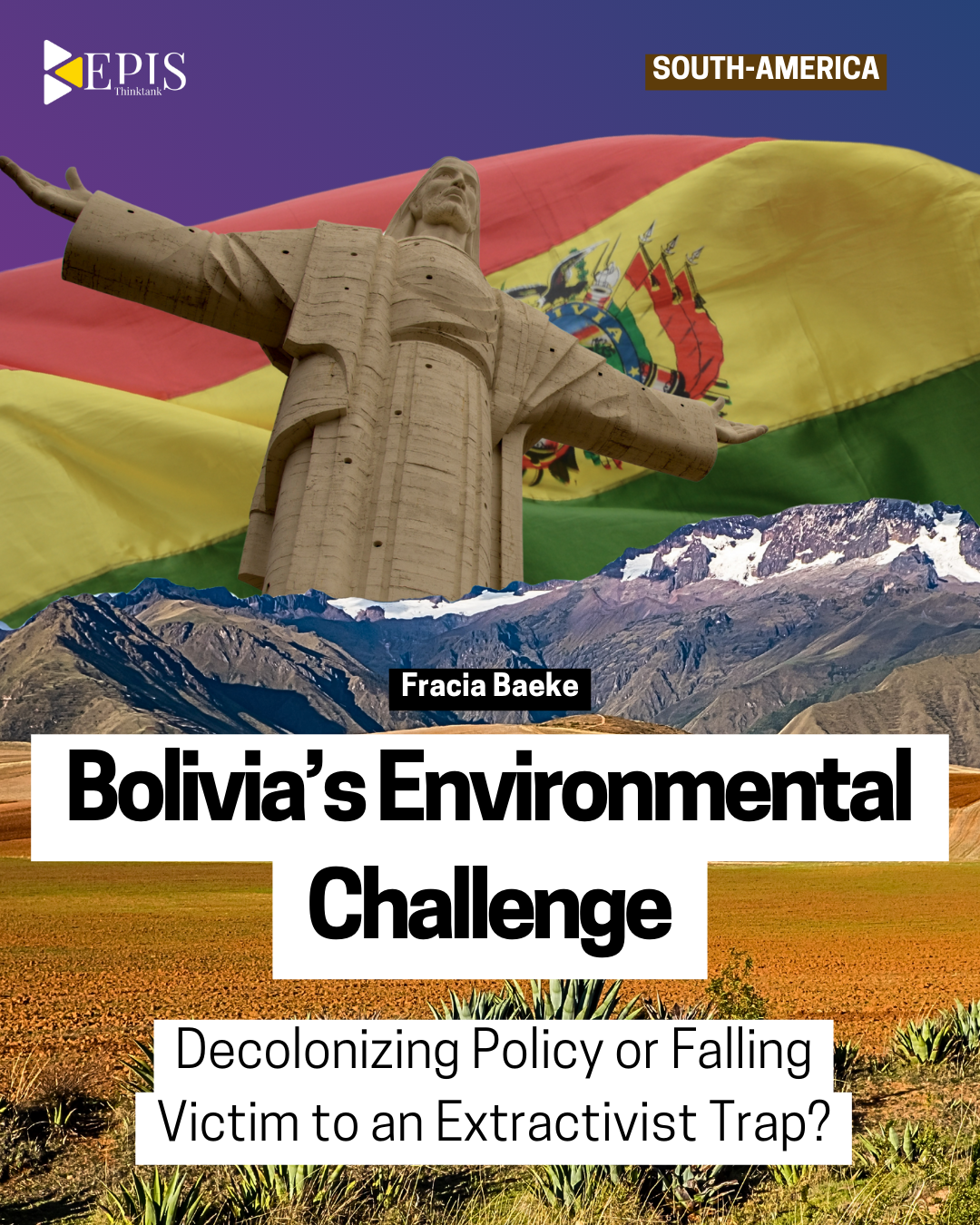
Bolivia’s Environmental Challenge
– Will it ever be possible for Bolivia to promote an environmental-forward political agenda while reproducing the structures of a neoliberal-capitalisit world system? – Indigenous principles and worldviews prioritising harmony with nature were centered in Morales’ political agenda, proving to be contradictory with the historical extractive model which reinforced dependency on this economic model to…