Tag: Arms Control & Disarmament
-
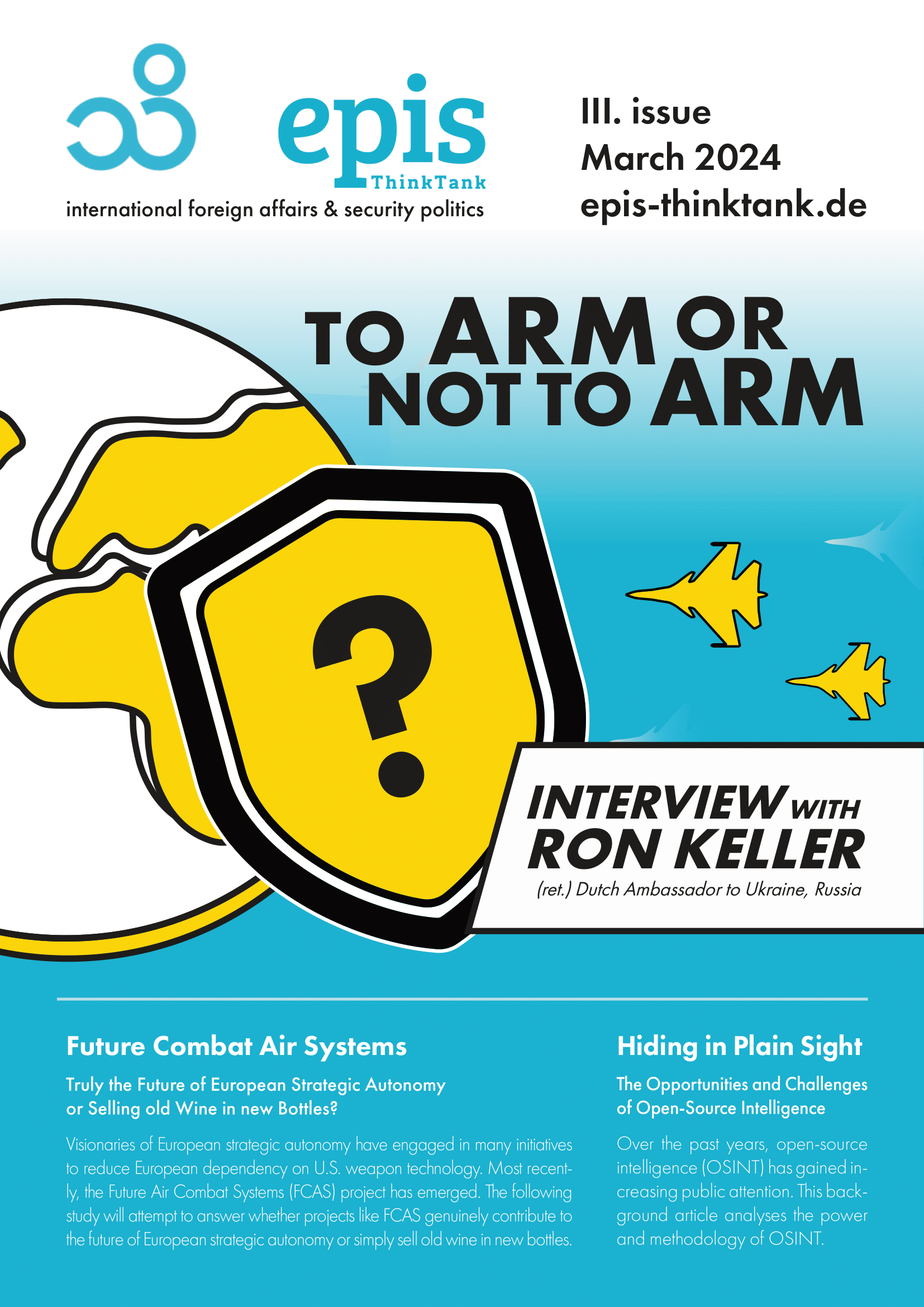
EPIS Magazine Issue III
The issue is dedicated to the many problems that are spread across the globe. In this issue it was also important to us to show the other – mostly inconspicuous – sides of diplomacy. Because we have the options, we are faced with the choice: to arm or not to arm?
-
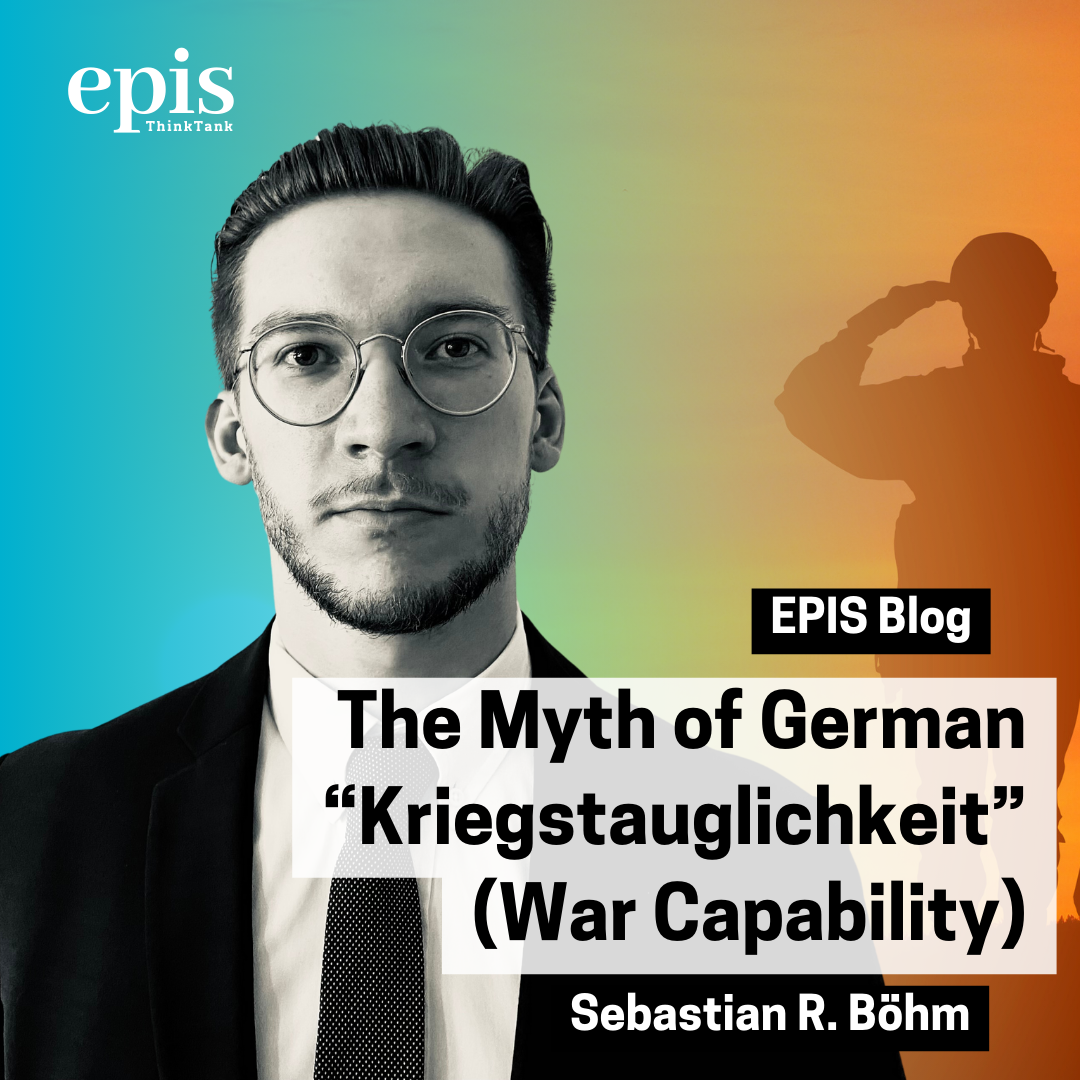
The Myth of German “Kriegstauglichkeit” (War Capability)
Readiness for war is important – si vis pacem para bellum. But those who demand it should look reality in the eye.
-
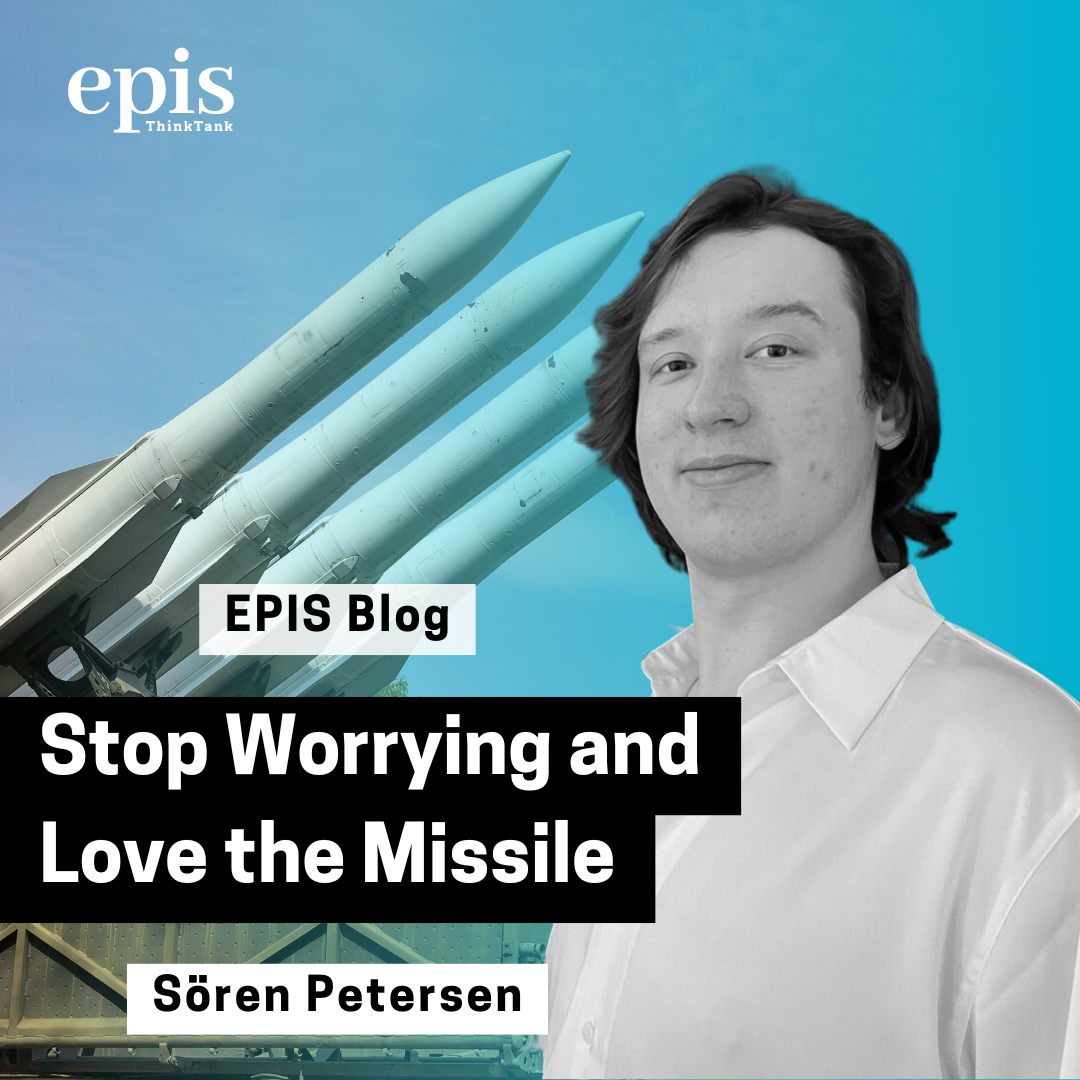
Stop Worrying and Love the Missile
The hesitation of Western decision-makers to deliver certain weapons to Ukraine plays into Putin’s hand and hurts the Ukrainian war efforts.
-

Realism or Idealism
Lethal Autonomous Weapon Systems are the latest contested development in warfare. This article will examine different approaches to their regulation and how they are incorporated into the framework of International Relations and International Law while also highlighting the ethical and practical debate at the heart of the issue.
-
Hybrid Warfare
Hybrid warfare is a contested concept. In its broadest form, it can be described as the use of different actors and different types of warfare. Specifically, actors may include regular military units, guerilla fighters, and terrorists. Combatants can also employ various tactics, ranging from physical military force to hacking and disinformation. Nevertheless, whether hybrid warfare…
-
Safety and Security
Accidents vs. Intent: In professional contexts, Safety refers to protection against unintentional hazards or accidents (e.g., wearing a helmet), while Security refers to protection against intentional threats or malice (e.g., guards against theft). Systemic Overlap: In critical infrastructure, the two are inseparable; a security breach (a hack) can lead to a safety failure (an explosion).…
-
Mutually Assured Destruction
Mutually Assured Destruction (MAD) is a nuclear doctrine first coined by Herman Kahn of the US Hudson Institute. It asserts that a nuclear attack would result in the annihilation of both parties. MAD assumes the attacked party would retain enough nuclear weapons to launch a second strike. During the second strike, the attacker would also…
-
Nuclear Triad
The nuclear triad describes the capability of a military to deliver nuclear warheads via bombers, in missile silos on land and submarines. Nuclear missiles based on land are often classified as Intercontinental Ballistic Missiles (ICBMs). Submarines may carry Submarine-Launched Ballistic Missiles (SLBMs) armed with nuclear warheads. The nuclear triad ensures an enemy cannot eliminate all…
-
Offence-Defence Balance
The offence-defence balance is the ratio between the resources belligerents need to conduct offensive or defensive operations. For example, a ratio of 1:4 would indicate that a defender needs one soldier to defend against four attackers. Realists have often sought to use the offence-defence balance to explain how material power can be transformed into actual…
-
Treaty on the Non-Proliferation of Nuclear Weapons
Entering into force in 1970, the Treaty on the Non-Proliferation of Nuclear Weapons aimed to limit the possession of nuclear weapons while promoting the peaceful use of atomic energy. The treaty only permits the US, USSR (Russia), the UK, France, and China to possess nuclear weapons. In exchange for this exclusivity, the countries with nuclear…