Tag: Bilateralism & Multilateralism
-
Between the eagle and the dragon
China has rapidly expanded its influence in the Caribbean through infrastructure, trade, and the Belt and Road Initiative. The U.S., once dominant in the region, now responds with tariffs, aid, and military ties, but often reactively. Thus, the Caribbean has become a key arena of U.S.-China rivalry, raising economic, political, and security stakes for both…
-
Trump and and the American Unilateralism
How does the Trump doctrine influence the U.S.’ unilateral engagement? The Trump doctrine follows that America’s needs are of primary concern, and multilateral aid, support, and institutions with heavy reliance on U.S. funding and engagement, should be reduced, minimized, or eradicated. The Trump era is demonstrating the risks of American disengagement but also the limits…
-

From Arms Race to Innovation Race
Main Question: Does the concept of an “AI arms race” accurately describe current global AI competition? Argument: While AI has military applications, framing it as an arms race oversimplifies its multidimensional, collaborative, and innovation-driven nature. Conclusion: The concept of an “AI innovation race” better captures the reality, urging global cooperation to ensure safe, beneficial, and…
-
Syria and the Future of Iran’s Foreign Policy
How has the new transitional government reshaped the Iranian foreign policy? Under Assad, Iran had a second line of defence and a supply route toward its allies. With the ousting of Assad, Tehran has lost significant presence throughout the region, leading Iran to consider elaborating a nuclear weapon arsenal or financing destabilisation efforts both in…
-
Reviving Relations – China, South Korea and Japan
Main question: How have Trump’s trade and defense policies influenced trilateral relations between China, Japan, and South Korea? Argument: Trump’s tariffs and defense cost demands have driven the three countries to deepen cooperation, despite historical tensions. Conclusion: The future of trilateral relations depends on their ability to balance U.S. pressure, internal mistrust, and the need…
-
Balancing Act
Should the EU treat Taiwan as a strategic partner despite China’s threats? Taiwan offers the EU critical economic and democratic alignment, but deepening ties risks economic retaliation and geopolitical friction with Beijing. The EU must cautiously strengthen ties with Taiwan to support democracy and resilience, while avoiding escalation with China.
-
Navigating China after an Election
Germany’s snap election on February 23 could bring a tougher China policy under Merz, marking a clear shift from Scholz’s pragmatic approach. While Merz warns against economic dependence, Germany’s recession may force a trade-off between strategic autonomy and economic stability. With China policy increasingly shaped by Brussels, Merz must rebuild EU trust to influence the…
-
German Foreign Policy is Becoming More Autonomous
1. What is the effect of the 2025 Bundestagswahl on German foreign policy. 2. The AfD and CDU commonly express growing discontent with Germany’s alliance system. 3. The results of the 2025 Bundestagswahl suggest that the idea of a more autonomous German foreign policy increasingly resonates with German voters.
-

Great Ambitions
What can the history of the EU strategic autonomy debate teach us about the recent calls for European unity and defense integration? The EU strategic autonomy debate has been ongoing for three decades, yet the EU member states have repeatedly failed to turn its ambitions into concrete policy changes. Unless European leaders provide strategies for…
-
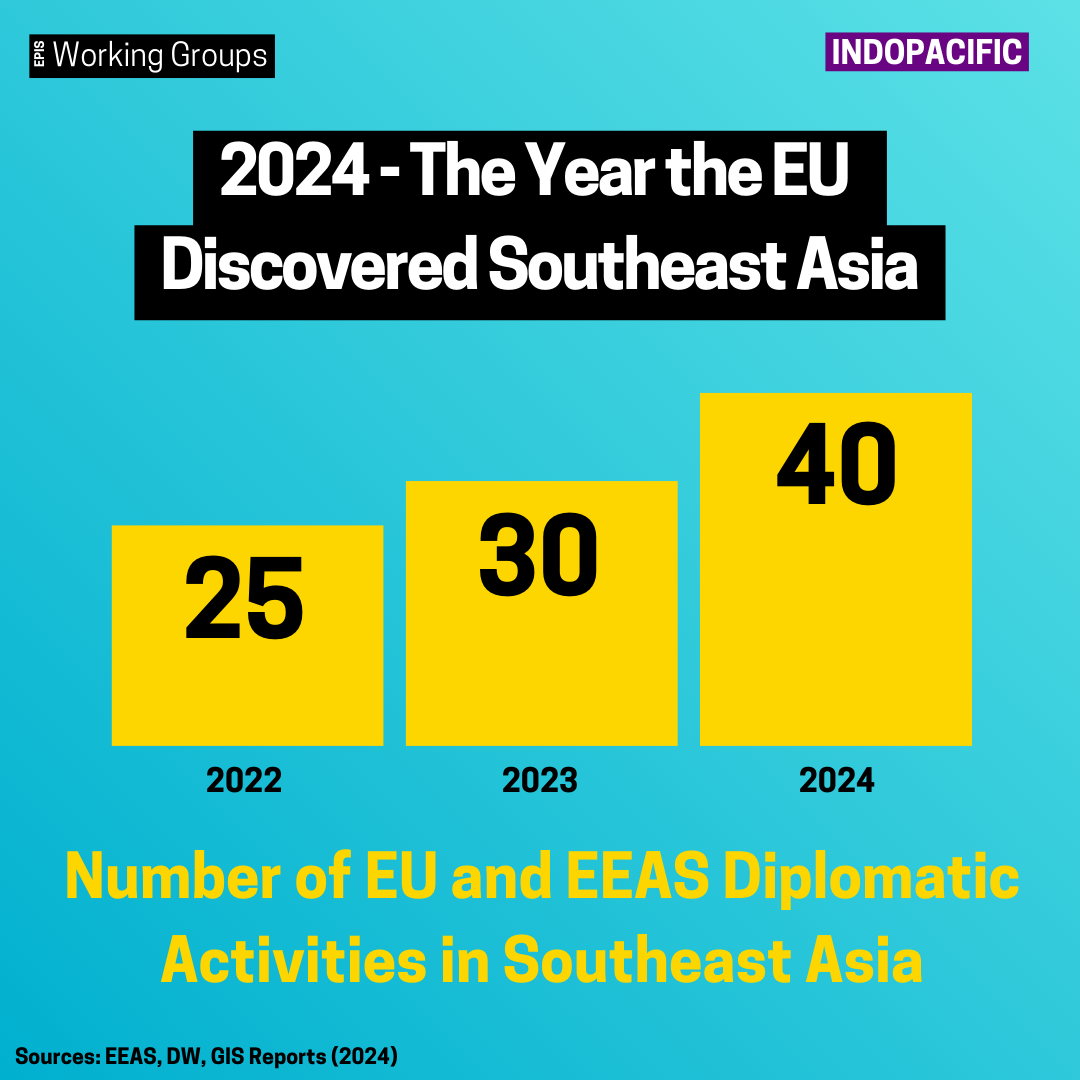
2024 – The Year the EU Discovered Southeast Asia
The EU has increased focus on Southeast Asia in its global strategy. The EU and ASEAN launched the €9.3 million SCOPE program for research and mobility. Southeast Asia’s strategic importance offers the EU a chance to expand its influence.