Tag: Cyber Defence-Protection & Cooperation
-
From Reactive to Proactive Cyber State
1. How has the United States’ approach to offensive cyber operations evolved after Trump’s first administration? 2. The U.S. moved from deterrence to persistent engagement, under the “Defend Forward” strategy introduced by Trump and institutionalised under Biden 3. Expanding offensive cyber operations could improve security, but it also carries the risk of escalation and instability.
-

The EU Should not Wait for Trump’s Green Light to Block TikTok
Should the EU ban TikTok without waiting for Trump? Romania’s case proves the platform’s danger to elections when a candidate with no party or funds rose to prominence via fake accounts and algorithm manipulation. By implementing an EU-wide ban, the Union would protect electoral integrity and demonstrate digital strategic autonomy.
-

The Militarization of Space
Why is space becoming a military domain? Western nations are shifting from scientific exploration to defense, investing in satellites for communication, GPS, and missile warning systems. The U.S. Space Force now surpasses NASA in funding, with bipartisan support. NATO allies like Italy, the UK, and Sweden are expanding military space programs. This trend reflects a…
-

Working in Darkness
1. How vulnerable are undersea cables, and what are the implications of their sabotage for security and global stability? 2.Undersea cables, carrying 95% of global data, are critical to communication, defense, and finance but are increasingly targeted. Attacks expose risks like physical damage and tapping, threatening economic and energy stability. 3.With 1.4 million km of…
-

Cable Sabotage in the Celtic Sea
How should Ireland cope with sabotage risks of its underwater infrastructure? Ireland should invest more in protecting its subsea infrastructure from sabotage by adversaries. The Irish government must modernize its outdated naval services so that Ireland’s adversaries refrain from sabotaging underwater infrastructure in Irish waters.
-

Why Israel’s Legitimacy Faces Unique Challenges
Why does Israel face exceptional challenges to its legitimacy compared to other states? Israel’s legitimacy is contested due to conflicting historical narratives, unresolved territorial disputes, and critiques of its national identity, often amplified by anti-Zionist and antisemitic rhetoric. While Israel’s actions can and should be scrutinized, denying its right to exist hinders peace; the path…
-

Sovereignty in Cyberspace
Is an international consensus on cyber-sovereignty possible? As cyber-attacks surge globally, the urgency for defining state sovereignty in cyberspace has intensified. This article explores the difficulties of regulating this domain, addressing issues like anonymity, the rapid pace of technological evolution, and conflicting state jurisdictions. By examining cyberspace alongside traditional domains like airspace and maritime zones,…
-

Artificial Intelligence & Aggressive Intentions
Can AI reshape the future of warfare and deterrence? This article explores how advancements in AI and autonomous weapons are transforming military strategy and state power dynamics. As weapons systems grow more independent, states are redefining deterrence strategies to maintain security in a rapidly evolving technological landscape. From drones to human-machine teaming, the article examines…
-
Cyber Attacks 2021-2023
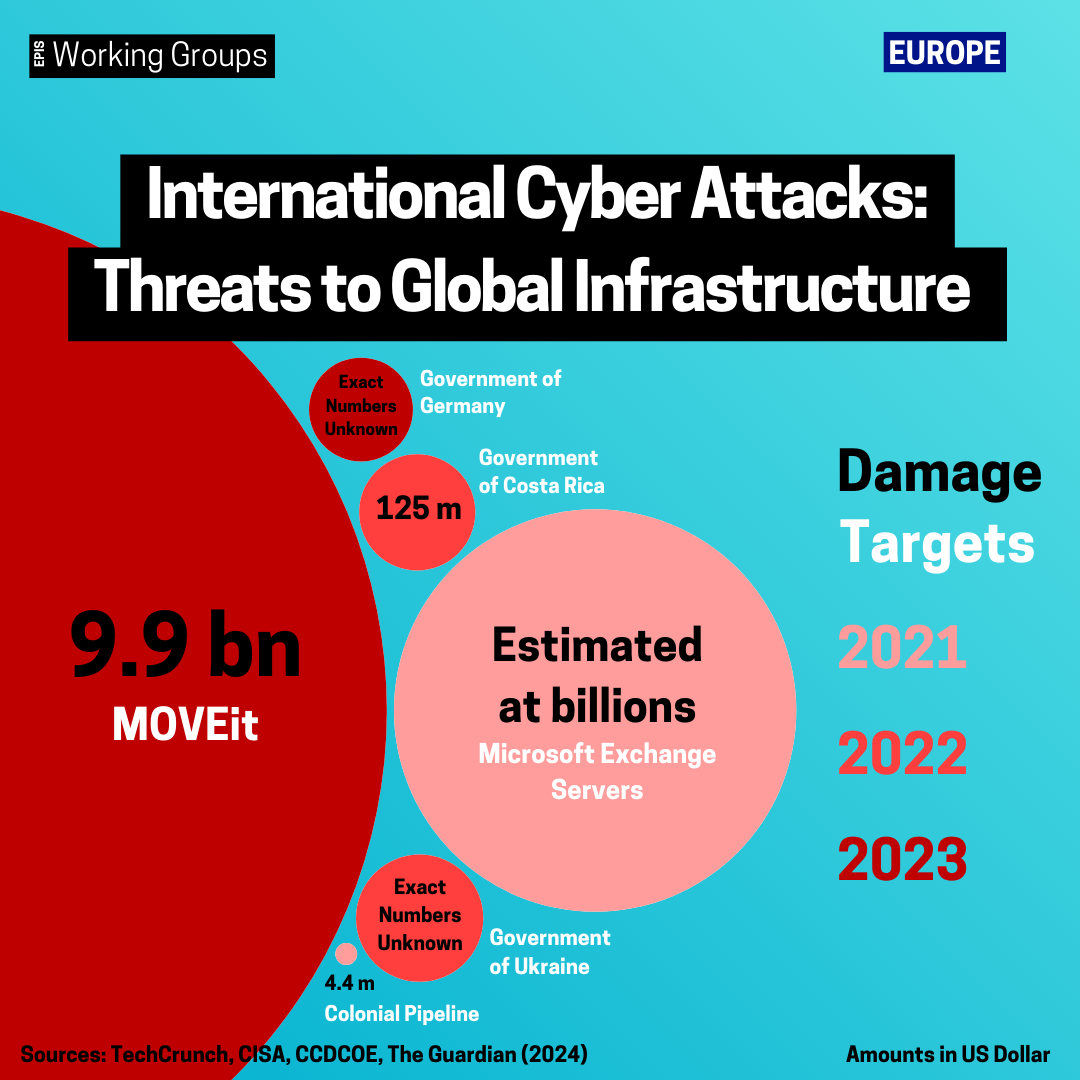
The European Working Group’s map shows major cyberattacks from 2021-2023, emphasizing vulnerabilities in critical infrastructure and the need for stronger cyber defenses.
-

Habsora and Lavender Artfical Intelligence Systems
With the incorporation of AI systems, new fully automated F2T2EA models may become a reality.