Tag: Military Alliances
-

Editorial: EPIS Report on Security Policy & Defence II
The Importance of the Military Industrial Complex for the Security of Europe
-
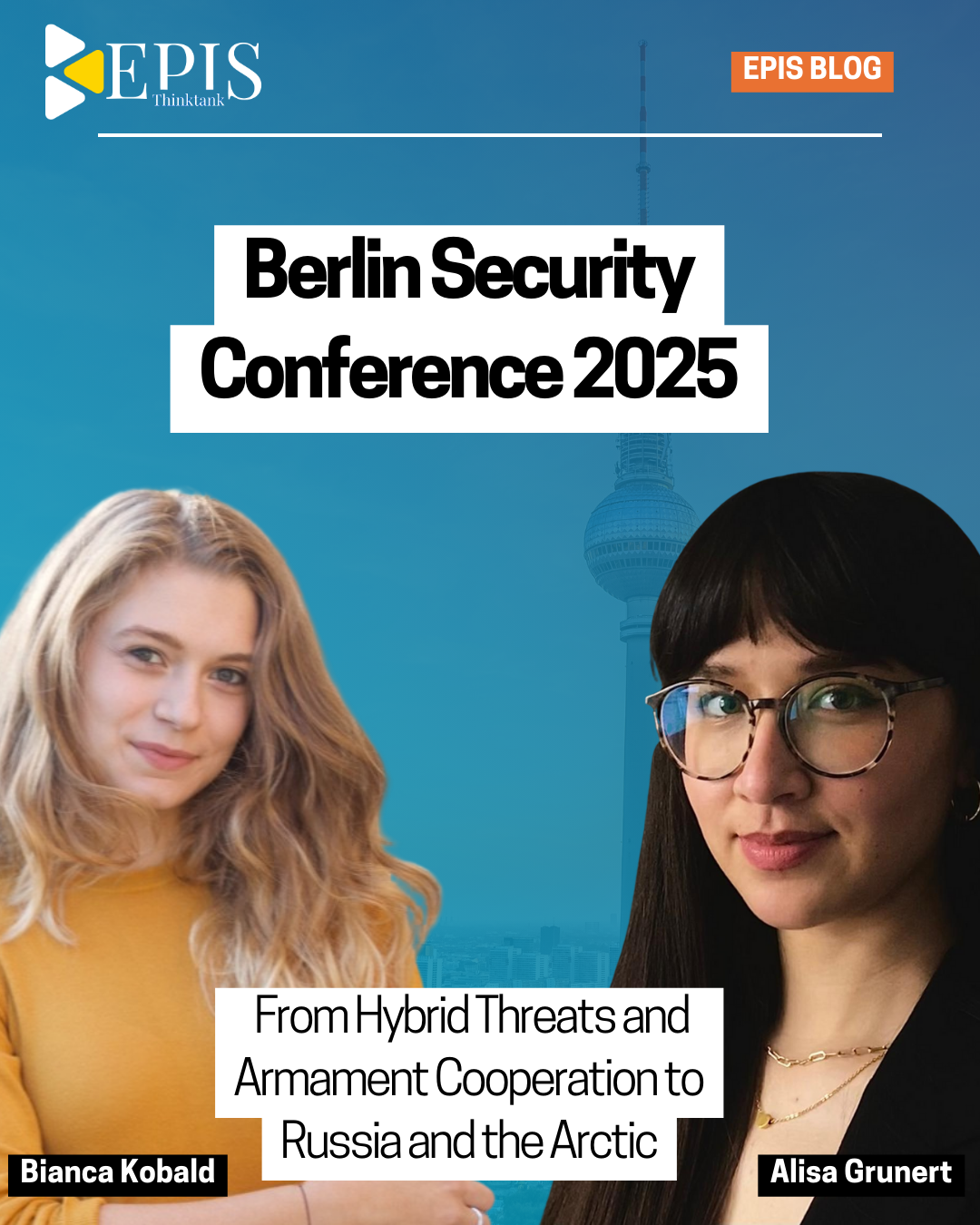
Berlin Security Conference 2025
How to secure Europe? – Strengthen defence capabilities via financial spending and multidimensional cooperation, special emphasis on the Arctic, Taiwan and Defence Tech – deterrence must change its shape
-
Deterrence Through Industrial Reinforcement
How does Europe’s defence-industrial base compare to Russia’s war economy, and what must Europe change to sustain high-intensity war and credibly support Ukraine as US backing wanes? Industrial capacity, mobilised at scale and able to adapt legacy systems, matters more than cutting-edge tech in attritional war; Russia currently does this better than Europe. Europe should…
-
Dissuading hybrid deterrence
– How is traditional warfare not enough in countering hybrid threats? – Traditional warfare is an insufficient tool in dissuading and countering the hybrid threats, and in the case of its usage, there appear to be blind spots and a lack of the desired effect – Countering hybrid threats requires an integrated approach of traditional…
-

Strengthening Europe’s Orbit
Why is Europe still vulnerable in space despite its relevance? Europe’s defence remains nationally fragmented, with divergent doctrines, weak shared situational awareness (SSA), slow attribution, and uncoordinated capabilities. Strengthening coordinated SSA, shared response standards, and joint capability development would allow Europe to build a resilient space security posture without creating a supranational military command.
-
About Defence Readiness 2030
The article asks how the EU can achieve defense readiness by 2030 while reducing reliance on the US. It argues that Europe is finally responding to security pressures by boosting defense spending, removing regulatory barriers, and launching programs like ReArm Europe and SAFE. It concludes that success depends on industrial capacity, political will, and public…
-
The 34th Economic Forum in Karpacz
The conference report highlights the 34th Economic Forum in Karpacz as a platform for diverse perspectives on security, showing that sustainable defense relies on people, civic engagement, and cross-sector collaboration. Discussions on Ukraine and Russian threats revealed gaps in preparedness, emphasizing the importance of public awareness, youth involvement, and mentoring the next generation of security…
-
Poland–Korea: A New Defence Alliance
How are Poland and South Korea expanding defence cooperation, and what are the strategic implications? Poland gains rapid access to advanced weaponry and industrial growth, while Korea secures a strategic entry into Europe as a global defence exporter. The partnership could become a lasting model of Europe–Asia defence cooperation if localisation and NATO integration succeed.
-
Rising Threats on NATO’s Eastern Border
Main question: How are rising Russian provocations threatening NATO’s eastern border? Argument: Since 2022, Russia (often with Belarus) has carried out drones, missiles, sabotage, and hybrid attacks in the Baltics, Romania, and Poland, escalating regional tensions and testing NATO’s defenses. Conclusion: Russia’s actions aim to intimidate neighboring countries; NATO must strengthen deterrence and coordination to…
-
Burkina Faso’s Militarised Turn
1.What does Burkina Faso’s shift to military governance reveal about its political trajectory and the future of governance in the Sahel? 2.The regime frames militarised governance as restored sovereignty, rejecting Western conditionality, while legitimising itself through nationalism, anti-colonial rhetoric, and closer ties with Russia. 3.This strategy strengthens regime survival, but risks deepening authoritarianism, and normalising…