Tag: Trade Policy
-

Editorial: EPIS Report on International Economic Relations Issue I
Main Question: How are economic policies becoming tools of national security and global power? Argument: Trade wars and shifting alliances show that economics and geopolitics are increasingly intertwined. Conclusion: Balance national interests with global cooperation
-
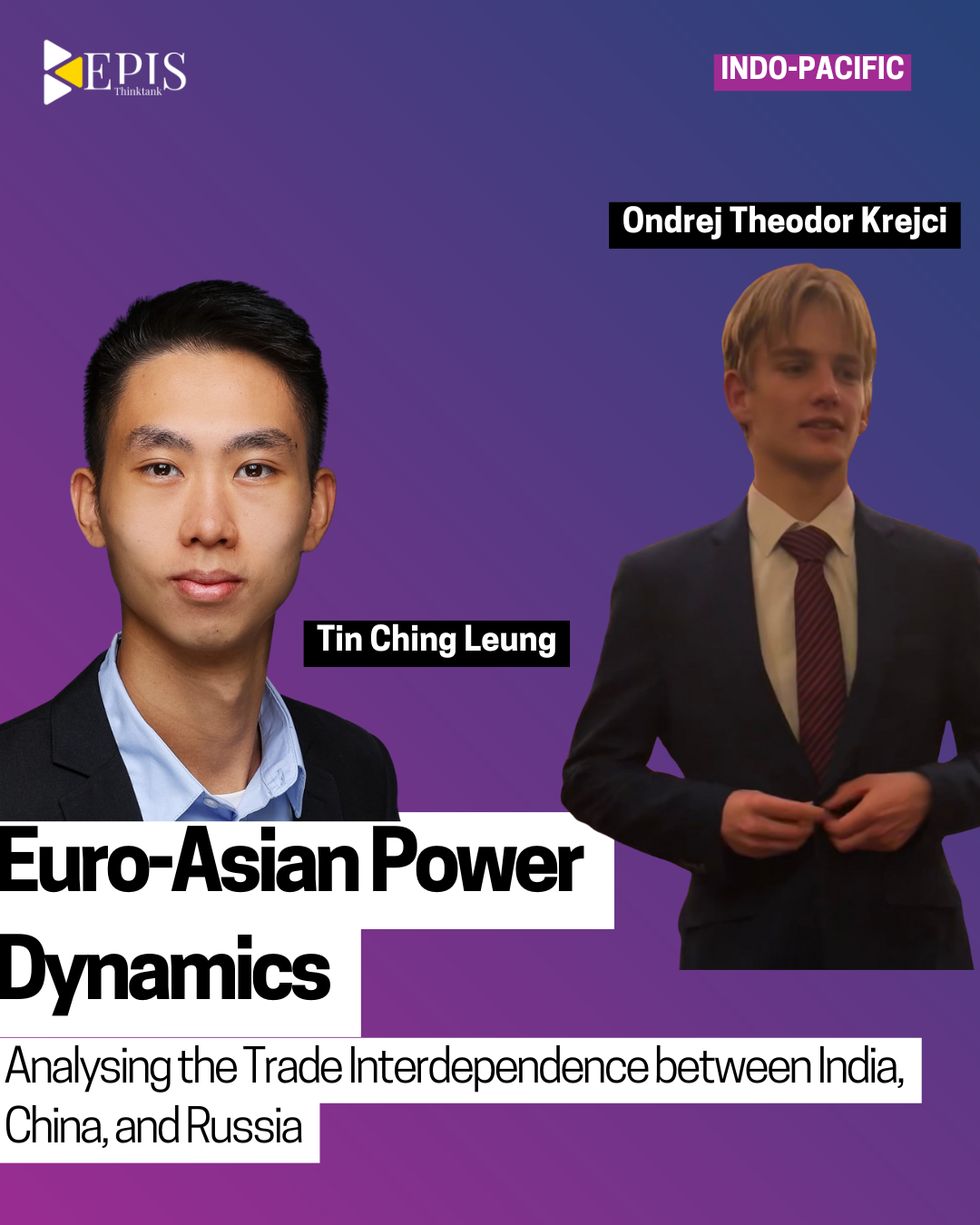
Euro-Asian Power Dynamics
Main question: How do current trade patterns illustrate the evolving economic and strategic relationships between India, China, and Russia? Argument: China leverages manufacturing and technology dominance, Russia pivots energy exports to Asia, and India balances national security needs with economic growth. Conclusion: Present trade patterns show deepening interdependence, with each power exploiting its comparative advantage,…
-

A Wake-Up Call for Industrial Policy?
– How should the European Union rethink its industrial policy in light of global shocks, strategic dependencies, and growing competition from the U.S. and China? – Fragmented national industrial strategies risk deepening inequalities, weakening competitiveness and undermining the Single Market. – The EU needs a coordinated framework that ensures that interventions are aligned with shared…
-

Just Another Trade Route?
Can the geopolitical situation in the straits of Malacca reveal possible future scenarios along the Northern Sea Route? Due to starkly contrasting geographical and political circumstances between the regions, chiefly relating to population density, distance between population centres and the presence of major powers it is difficult to make an accurate prediction on the viability…
-

Iraq’s Development Road
Iraq is planning to build a trade corridor that connects the Persian Gulf to Europe via Iraq and Turkey The project faces domestic challenges due to sectarianism and corruption in Iraqi governance and disagreements with the Kurdish Regional Government. Similar projects, such as the IMEC, are strong competitors aiming to fulfill the same purpose.
-

Accelerating Innovation Through Defence Spending
How can we maximise the societal benefit of increasing defence expenditure? There is a positive correlation between higher defence expenditure and overall public R&D expenditure. The EU needs to strengthen the interconnectedness of the defence and civilian sectors to maximise innovative spillover effects that result from an increase in defence.
-

The Lobito Corridor
How does the Lobito Corridor reflect the growing use of infrastructure to shape Africa’s trade patterns and global partnerships? The Corridor is a strategic project by the U.S. and to counter China’s influence in Africa through development-focused infrastructure.The Lobito Corridor exemplifies how infrastructure can drive regional integration, enhance global supply chains, and serve as a…
-

Pressure to Pivot: MENA’s Response to U.S Tariffs
The ripple effects of imposing tariffs on Middle Eastern countries go far beyond trade, straining diplomatic ties, disrupting local industries, and slowing regional growth. The imposition of US tariffs will make the Gulf Cooperation Council (GCC) countries grow at a slower pace. Trump’s new trade policies can accelerate the shift of Middle Eastern countries to…
-
Trump’s Trade War and Its Mixed Impact on Brazil
How will Trump’s trade offensive reshape Brazil’s economic position in the global market? Brazil emerges as the unlikely beneficiary of a trade war it didn’t start, with its agricultural sector gaining unprecedented Chinese market share while its industrial base faces crushing U.S. tariffs. Either Brazil must leverage this moment to modernize infrastructure and strengthen manufacturing,…
-

A Chain of Retaliation
1.How did China adapt its strategy after the US’s Liberation Day measures? 2. China initially responded cautiously to US tariffs but, after Liberation Day, shifted towards a more intense and multifaceted counterstrategy, combining higher tariffs with diplomatic initiatives to rally international support. 3. China remains primarily reactive but has increased the intensity and scope of…